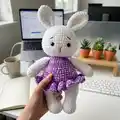
About This Lily Bunny Amigurumi Pattern
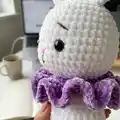
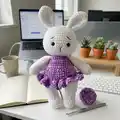
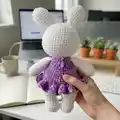
This pattern creates Lily Bunny, a plush chenille amigurumi with a sweet ruffled dress and expressive embroidered features. The design uses soft sport/chenille yarn and a simple construction split into head, body, legs, arms, ears and a skirt. Techniques include working in rounds, shaping with increases and decreases, head sculpting, and sewing parts together for a tidy finish.
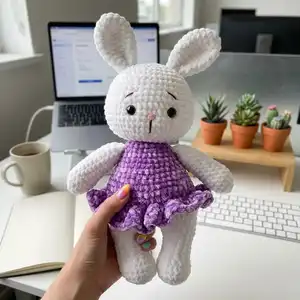
The finished toy is approximately 35 cm tall using the recommended materials and hook size. US terminology is used throughout, and the pattern difficulty is rated easy to medium.
Why You'll Love This Lily Bunny Amigurumi Pattern
I absolutely love this pattern because the chenille yarn gives Lily Bunny an irresistible soft texture that makes hugging a pure delight. I enjoy the simple shaping that produces a classic amigurumi silhouette while leaving room for little custom touches like embroidered brows or a different colored skirt. Sewing and assembling the pieces is satisfying and results in a snug, well-balanced toy that stands or sits nicely. Making Lily Bunny always feels quick and rewarding, and I love gifting these finished bunnies to friends and family.
Switch Things Up
I love how easy it is to customize Lily Bunny by changing yarn colors; try pastel combos or bold contrasts to give your bunny a fresh personality.
I sometimes make a mini version by using thinner yarn and a smaller hook to create keychain-sized bunnies that are perfect tiny treasures.
If you want a chunkier, cuddlier toy, I use bulkier chenille and a larger hook for a plush, huggable result that works great as a nursery toy.
I enjoy swapping the solid skirt for stripes or a two-tone ruffle to make each dress unique; experiment with alternating colors each round for a fun effect.
For safer toys intended for small children, I replace safety eyes with embroidered eyes and securely hide all threads to avoid choking hazards.
I often add tiny accessories like a crocheted bow, a removable scarf, or a little pocket on the dress to give the bunny extra charm and play value.
Try different facial expressions by moving the embroidered eyebrows and mouth slightly; small changes make big differences in character.
I sometimes add wire inside the limbs for posability, but for a soft, child-safe toy I skip wire and rely on careful stuffing for posture.
To create a whole collection, I make the same pattern in seasonal palettes: spring pastels, autumn neutrals, or festive holiday shades for gift sets.
I recommend practicing head sculpting on a spare piece first, then transferring the technique to your finished head to control expression without overworking the face.
Common Mistakes & How to Fix Them
✗ Skipping stitch markers when joining pieces or starting the body can cause misalignment; place a marker where indicated and check it often to keep rounds aligned.
✗ Not stuffing as you go leads to uneven shaping and hard-to-fix lumps; stuff gradually and evenly, especially in the neck and head areas.
✗ Tight or inconsistent tension results in uneven fabric and misshapen parts; maintain a consistent, relaxed tension and practice a few rounds if you change hook sizes.
✗ Forgetting to place safety eyes at the stated rounds will place facial features incorrectly; insert the safety eyes between rounds 8 and 9 with 8 stitches between them as instructed.
✗ Overstuffing the head can make closing the opening difficult and distort the face; stuff firmly but not overly, then sculpt and hide the yarn tail as directed.